Ondertitelbril: Live Captions on Smart Glasses
An Android app that turns Dutch speech into live captions on smart glasses for deaf and hard of hearing people. Fully local, no cloud. Born from the Hackathon Inclusive Technology by UWV and Platform Inclusieve Technologie.
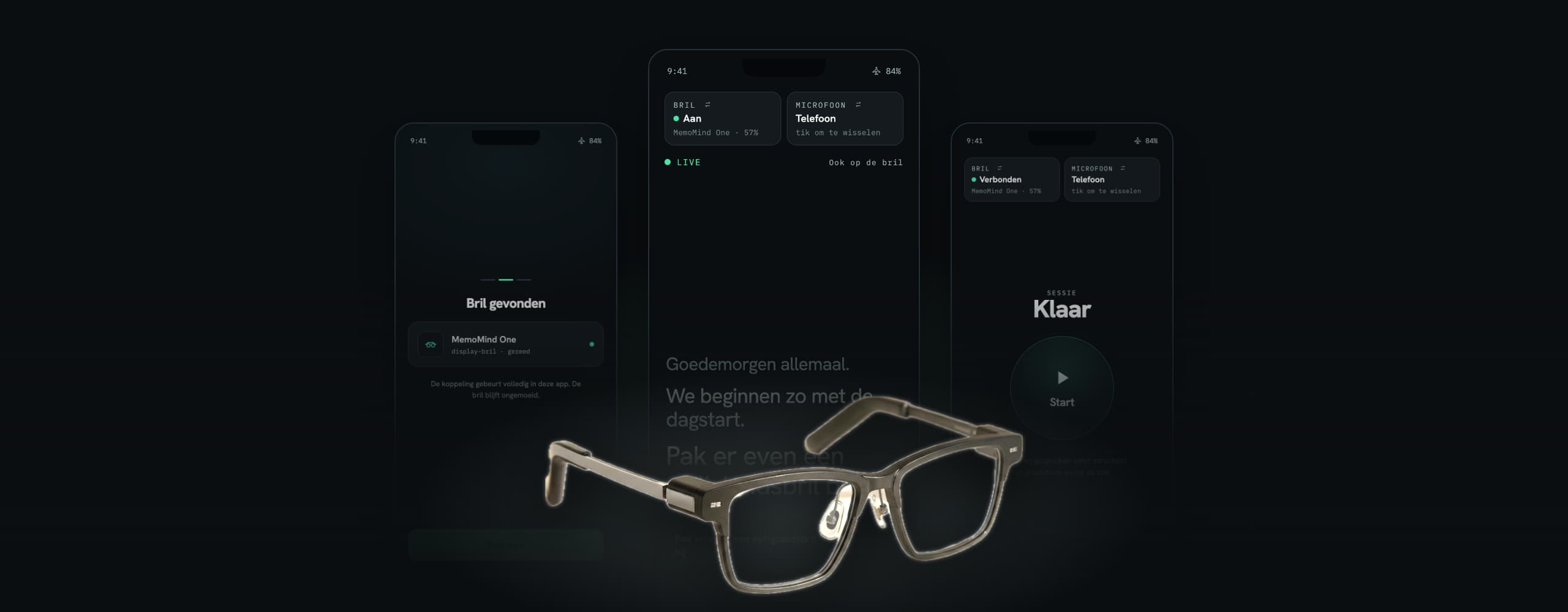
Imagine not being able to hear and still taking part in every conversation. Ondertitelbril (Dutch for "caption glasses") is a prototype that makes that possible. A smartphone listens, turns speech into text on the device itself and sends the captions to a pair of smart glasses. The wearer simply looks at the person talking and reads along.
Live captions of the Dutch King's speech, seen through the glasses
How It Started
Together with Dare Health Innovation I joined the Hackathon Inclusive Technology, organised by UWV and Platform Inclusieve Technologie. One of my teammates went deaf later in life and already uses glasses with live captions. Those glasses send every conversation to the cloud to be transcribed. That made me curious whether it could be done locally. After the hackathon I started digging and found out that for Dutch, a local version for this type of smart glasses didn't exist yet. So I built one.
For deaf and hard of hearing people a big part of the workday gets lost. In the hallway, at the coffee machine, when a colleague drops by and during meetings. Those are exactly the moments where a phone screen gets in the way and glasses don't.
What Makes It Different
Speech recognition runs on the phone itself. The text goes to the glasses and the audio is gone within seconds. No data or audio ever leaves the app, so an organisation keeps full control over its own information. The app doesn't even ask for internet permission and works in airplane mode.
Fully local
Dutch speech recognition runs on the phone. Nothing goes to the cloud.
Plug and play
Turn on the glasses, the phone connects and one button starts the captions.
Any glasses
Own Bluetooth connection, no manufacturer app. The MemoMind One is the first pair.
Screens
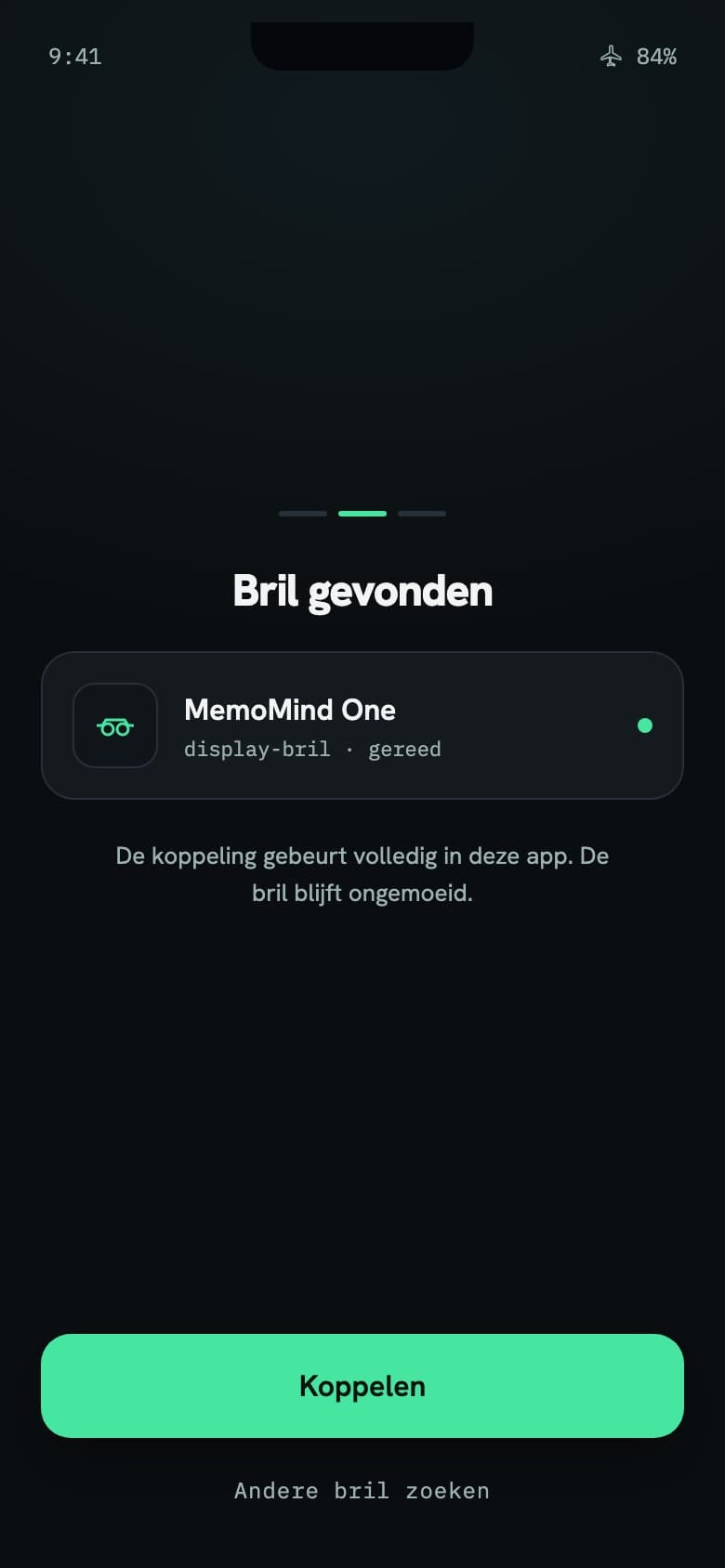
Pair the glasses
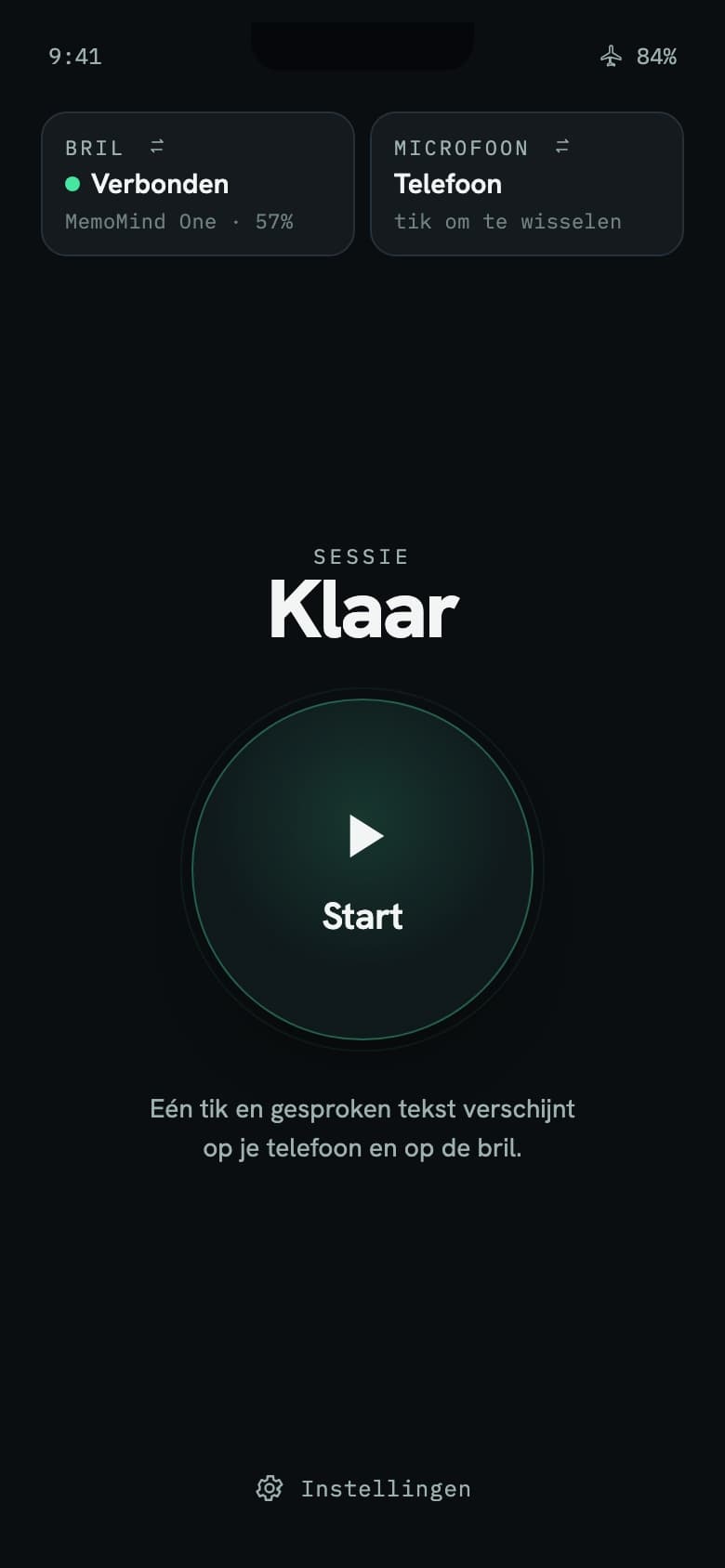
One button to start
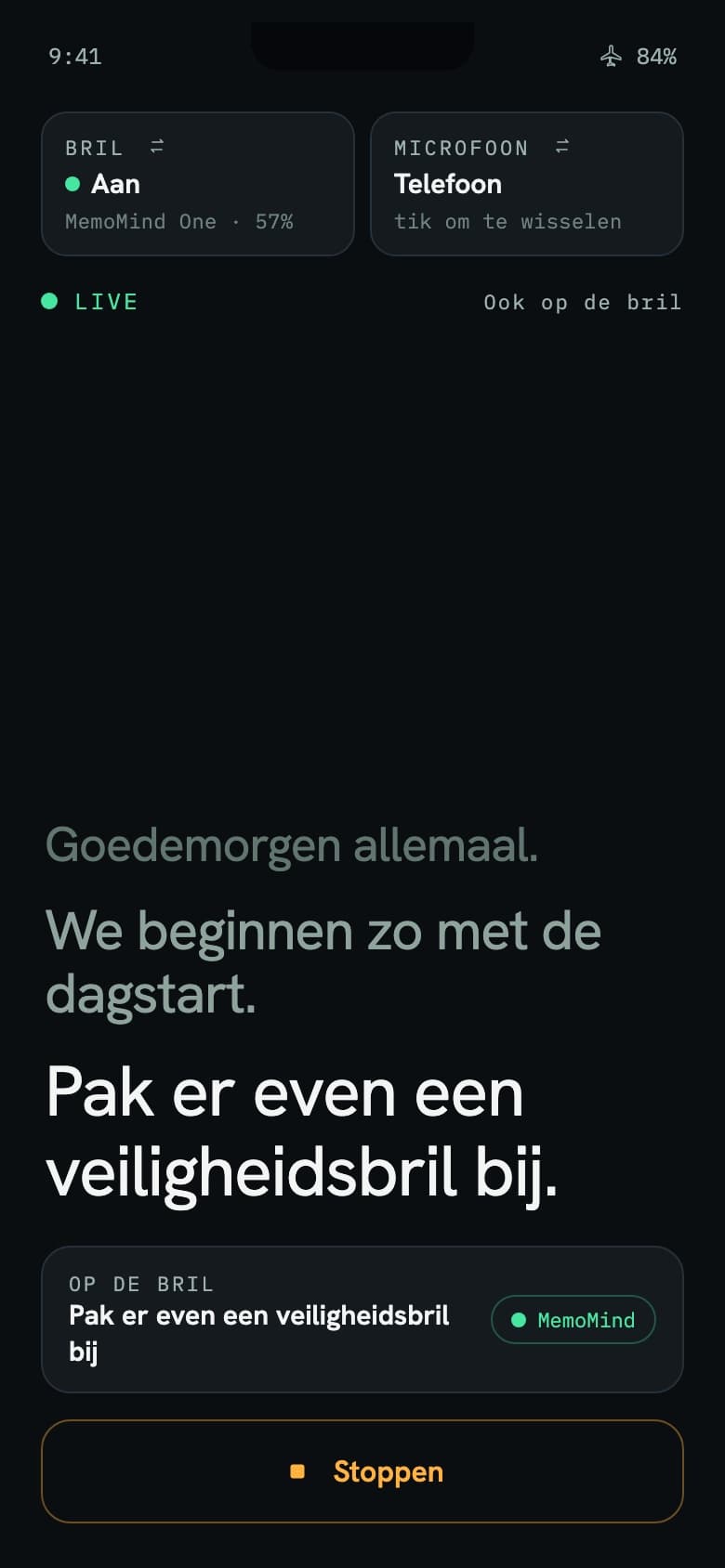
Live captions
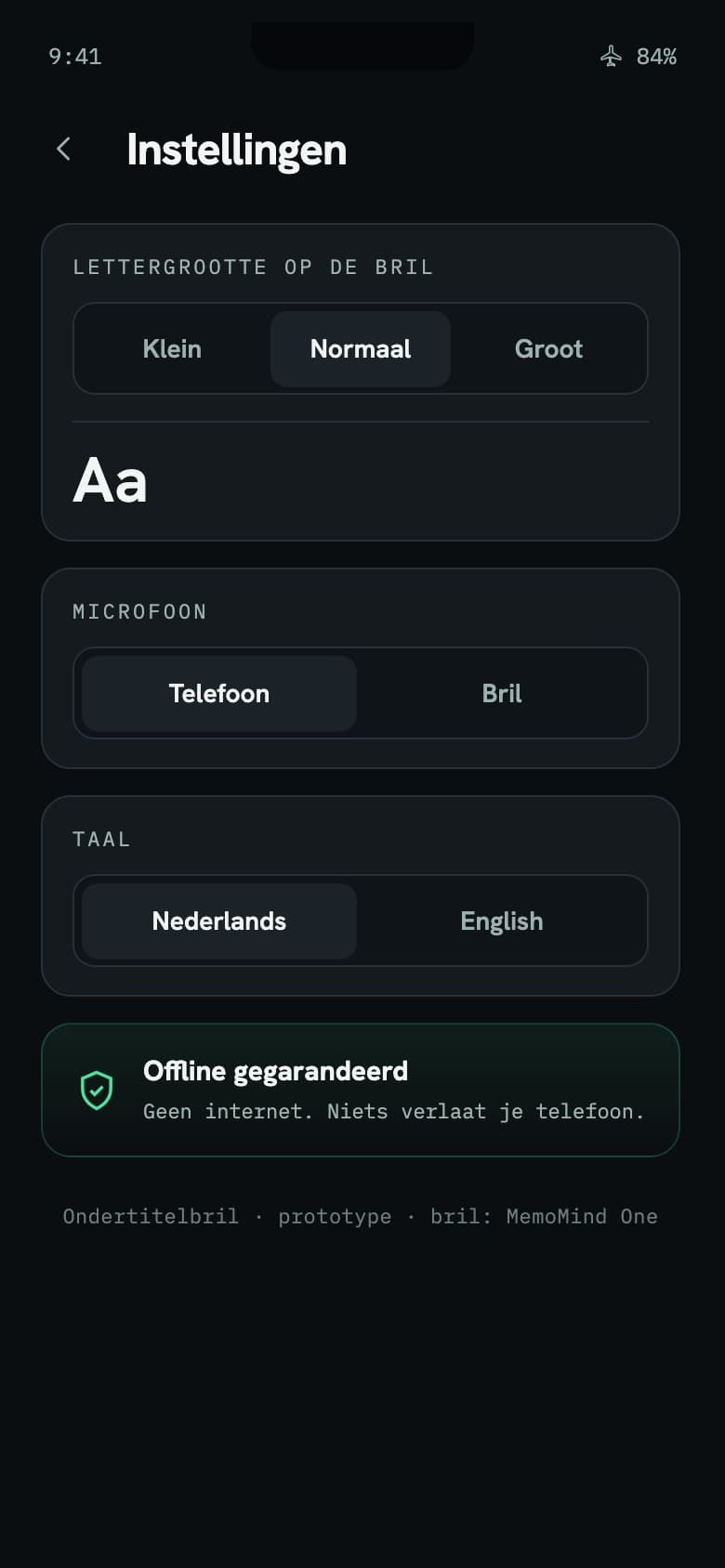
Settings
Under the Hood
The app is native Android in Kotlin with Jetpack Compose. Speech recognition uses the Parakeet model via sherpa-onnx, with speaker recognition to filter out the wearer's own voice. A lot of time went into measuring instead of guessing. I benchmarked models, noise conditions and quantisation on Dutch test sentences. Quantising only the right layers of the model brought the word error rate on clean speech down from 5.3% to 1.8%, without losing speed on the phone.
Behind the Project
What I like most: during a conversation the technology almost disappears. You look at the other person instead of at a screen, so communication feels natural right away. Ondertitelbril is a working prototype, not a finished product. Do you recognise this problem in your organisation? Send me a message and let's talk.
Tech Stack
Kotlin, Jetpack Compose, Bluetooth LE, sherpa-onnx, Parakeet